
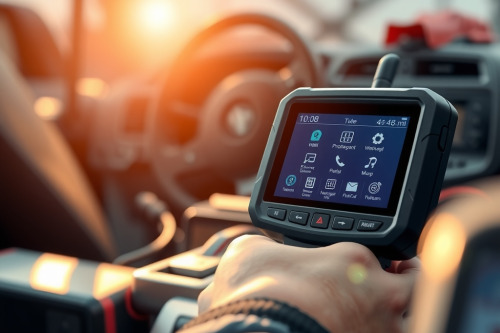
Modern automotive repair shops lose thousands of dollars annually on scan tools that fail during complex bus communication faults. After 15 years diagnosing stubborn electrical anomalies in high-volume repair shops, I judge scan tools strictly by diagnostic speed and vehicle coverage. Prioritizing the right OBD2 scanner features for professional mechanics separates profitable technicians from unequipped technicians who guess at intermittent faults.
Essential OBD2 Scanner Features for Professional Mechanics
Basic code readers pull generic DTCs and freeze frame data. Professional diagnostic routines require direct command of vehicle actuators to confirm mechanical and electrical integrity.
Bidirectional Control Functions vs. Passive Monitoring
Passive scanners display sensor output without verification capability. When an oxygen sensor reads lean, a passive tool cannot tell if the fuel injector clogged or if the wire harness severed. Bidirectional control functions force the Powertrain Control Module to command specific components on demand. You can pulse individual fuel injectors, cycle the ABS pump, or command variable valve timing solenoids at 10% duty cycle increments.
- Pros: Cuts diagnostic labor by 50% on EVAP purge tests and cooling fan relay checks. Pinpoints failed actuators without physical back-probing.
- Cons: Carries potential to damage fragile components if operated outside safe operating temperature limits. High hardware cost compared to generic readers.
System Actuation Tests in the Bay
Commanding a cylinder power balance test identifies weak cylinders within 30 seconds. If a component fails to respond during an active test, you pair your scanner findings with a dedicated oscilloscope to test signal ground integrity directly.
Advanced ECU Coding Capabilities vs Simple Adaptations
Component replacement on modern chassis requires software synchronization. Basic scan platforms complete simple throttle relearns, but they fail when a customer needs a new body control module or steering angle sensor calibrated.
Online Coding vs. Offline Programming
Advanced ECU coding capabilities let you flash configuration strings into replacement modules to match vehicle specifications. European platforms require online coding servers to synchronize security keys and component identification tables with manufacturer databases.
- Pros: Keeps high-margin programming jobs in-house instead of subletting to franchise dealerships. Eliminates diagnostic trouble codes generated by module configuration mismatch.
- Cons: Requires active annual software subscriptions costing between 600 and 1500 dollars per year. Flashing errors risk bricking expensive control units during voltage drops.
Component Matching Realities
Offline coding alters existing software parameters without contacting factory servers. It activates hidden convenience features or recalibrates automatic transmission clutch slip points after fluid services. Professional workshops need both workflows to maintain rapid bay turnover.
Evaluating CAN FD Protocol Support and DoIP Hardware
Vehicles built after 2020 transmit data at speeds far exceeding standard 500kbps Controller Area Networks. Scanners lacking modern interface hardware can't read past the gateway module on newer platforms.
CAN FD Protocol Support
Modern General Motors and Ford models operate on Flexible Data-Rate networks running at up to 5Mbps. CAN FD protocol support enables the tool to interpret complex packets without communication timeouts. Choosing a tool without integrated CAN FD chips forces technicians to purchase clunky external adapters that fail under shop floor abuse.
Diagnostics over Internet Protocol (DoIP)
Diagnostics over Internet Protocol handles gigabit data transfers required for multi-camera driver assistance systems and infotainment modules. BMW, Volvo, and Jaguar Land Rover rely heavily on DoIP for basic module updates. Tools equipped with native DoIP interfaces eliminate bottlenecking during full-system diagnostic sweeps.
Comparing Live Sensor Data Graphing and Topology Mapping Diagnostics
Raw numeric lists hide erratic sensor dropouts that trigger intermittent check engine lights. Visual presentation tools help you identify erratic signals instantly.
Live Sensor Data Graphing
High refresh rates make live sensor data graphing indispensable for identifying throttle position dead spots. A scanner must process at least 30 frames per second across 4 simultaneous PID plots. Overlaying mass airflow sensor voltage directly against engine RPM reveals vacuum leaks within seconds of throttle snap tests.
Topology Mapping Diagnostics
Topology mapping diagnostics displays the entire vehicle communication architecture as an interactive color-coded tree. You instantly identify offline sub-networks, severed gateway connections, and bus termination resistor failures without opening separate menus for each controller.
- Pros: Maps entire 40-module vehicle networks in under 45 seconds. Immediately highlights which specific bus branch caused communication failure.
- Cons: High screen processing demands drain internal tablet batteries quickly. Complex visual overlays can overwhelm novice technicians unfamiliar with network wiring schematics.
Practical Field Trade-offs in OBD2 Scanner Features for Professional Mechanics
Diagnostic equipment purchases represent long-term shop investments. Balance daily ergonomics against annual operational overhead before buying your next diagnostic platform.
Wireless VCI vs. Direct Cable Tether
Bluetooth and Wi-Fi Vehicle Communication Interfaces permit vehicle monitoring while standing beside the engine bay or working on an under-car lift. However, high-frequency shop interference from TIG welders or tire balancers drops wireless signals during sensitive module configuration. Keep a heavy-duty 16-pin OBD2 cable in your toolbox for security-critical programming tasks.
Software Subscriptions and Lockout Policies
Hardware pricing doesn't tell the full financial story. Certain scanner manufacturers lock all diagnostic functions the day your subscription expires. Select tool builders maintain existing functionality when subscriptions lapse, restricting access only to new car model updates and online coding servers.
Final Verdict on OBD2 Scanner Features for Professional Mechanics
Success in commercial diagnostic work depends directly on your platform capabilities. Prioritizing top OBD2 scanner features for professional mechanics protects your shop against diagnostic bottlenecks and costly dealer sublets. Audit your weekly fleet repair orders, select a scanner offering native CAN FD support with active bidirectional actuation, and upgrade your bay capabilities today.