
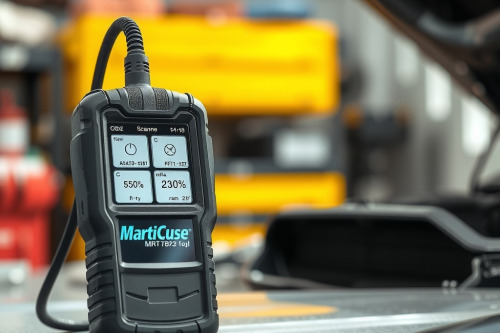
Diagnostic turnaround times dictate your repair shop profitability per bay hour. After 20 years diagnosing electrical faults and network comms failures, we know cheap tools drain labor revenue fast. Pinpointing the best OBD2 scanner features for professional mechanics separates high-throughput shops from technicians guessing at fault trees. Equipment must reliably survive high-demand fleet duty cycles and complex multi-bus vehicle networks.
Core processing power and bus protocol communication standards
Consumer code readers choke on modern multi-layered gateway architectures. Late-model European and domestic platforms deploy advanced networks that transfer packets at speeds older hardware can't interpret. Your scan tool hardware must process wide bandwidths without crashing during critical read-write cycles.
CAN FD and DoIP protocol integration
Controller Area Network Flexible Data-Rate (CAN FD) transmits payloads at 5 Mbps compared to traditional high-speed CAN capped at 500 kbps. Diagnostic over Internet Protocol (DoIP) pushes speeds past 100 Mbps over unshielded twisted-pair wiring. Without native CAN FD and DoIP transceivers built into your Vehicle Communication Interface (VCI), you cannot interface with chassis electronics on modern GM, Ford, BMW, or Volvo chassis. Relying on slow external dongle adapters adds interface latency and induces packet drops during diagnostic routines.
VCI processing and wireless stability
We require minimum octa-core processors running at 2.0 GHz backed by 4GB of RAM in the base tablet. The VCI must maintain dual-band 2.4 GHz and 5.0 GHz Wi-Fi along with Bluetooth 5.0 connections. Dropping signal during module adaptation bricks the target controller immediately. Industrial-grade hardware buffers frame data locally within onboard memory to preserve programming routines even if your tablet connection disconnects momentarily.
Bi-directional control and active component testing requirements
Passive diagnostic readers simply query trouble codes and static freeze-frame data. Professional technicians need full command execution over actuators to confirm component mechanical movement versus circuit integrity issues.
Isolating circuits via active actuation
Active testing bypasses software logic directly from the diagnostic platform. You command variable camshaft timing solenoids to sweep through 40 degrees of advance while monitoring engine displacement angles. You cycle fuel pump duty cycles from 10% to 90% via pulse-width modulation (PWM) to benchmark pump current draw against OEM specs. Bi-directional actuation eliminates unnecessary harness disassembly and verifies whether faults originate in the harness, the load, or driver circuits within the controller.
Calibration resets and sensor initialization
Modern component replacement requires mandatory calibration sweeps. Replacing an electronic throttle body demands instantaneous throttle position relearn procedures. Steering angle sensors (SAS), occupant detection mats, and electronic parking brake (EPB) service modes must be addressed right on the lift. A pro-grade tool executes these adaptations within 3 clicks of landing on the specific module menu.
Evaluating best OBD2 scanner features for professional mechanics in ECU coding
Module replacement forms a massive share of billable mechanical labor. Basic diagnostic units can't write vehicle configuration data to fresh control units, leaving your shop dependent on mobile diagnostic sublets or dealership assistance.
Online parameterization versus offline variant coding
Advanced diagnostic platforms split module initialization into variant coding and full software flash reprogramming. Variant coding assigns market-specific parameters, such as daytime running lights or tire circumference values, directly into non-volatile memory. Online ECU coding pulls verified flash calibration files directly from cloud infrastructure, calculating checksum hashes automatically to preserve module bootloaders.
J2534 pass-thru compliance
Serious diagnostic bays demand an independent SAE J2534-1 and J2534-2 compliant passthrough interface. This standard allows you to flash engine control units and transmission control units directly via OEM subscription software using your primary scan platform interface. It eliminates the need to maintain duplicate hardware boxes across multiple OEM portals.
Live data graphing refresh rates and bus bandwidth latency
Intermittent driveability complaints demand high-speed parameter identification (PID) tracking. When diagnosing an engine misfire under load, low-resolution data will completely miss microsecond sensor dropouts.
PID acquisition speeds under heavy bus load
Basic scanners query the bus serially, resulting in sample rates as slow as 2 updates per second across 8 data PIDs. Professional platforms demand sample rates exceeding 30Hz across at least 12 critical PIDs concurrently. If a mass airflow sensor signal drops for 50ms, a slow scan tool averages the frame out. High-speed acquisition captures the voltage trough immediately. You can cross-reference high-speed scanner data with an external oscilloscope to pinpoint electrical noise on signal grounds.
Multi-graph overlay and synchronization
Merely viewing values in numerical data lists wastes diagnostic time. The software must plot multiple PIDs on a single, synchronized timeline. Overlaying oxygen sensor voltage against short-term fuel trim and engine RPM reveals vacuum leaks and lazy lambda sensors within 3 engine rev cycles. Hardware units must support minimum internal ring buffers that record 500 frames of pre-trigger and post-trigger data when user-defined thresholds breach normal operating bands.
Network topology mapping for complex gateway architecture
Modern vehicles network up to 70 separate microprocessors across multiple sub-busses. Troubleshooting serial data faults using flat module lists is completely inefficient in flat-rate shop environments.
Visualizing bus structures and gateway status
Dynamic topology mapping provides a visual layout of the entire vehicular network layout. The software displays high-speed CAN, low-speed CAN, LIN, and FlexRay loops in color-coded architecture blocks. A technician spots a crashed network node in less than 10 seconds. When an infotainment control unit takes down a shared communication ring, the topology display highlights the point of bus disruption with clear red visual tags.
One-click fault scanning and bus-wide clearing
Scanning 60 control modules sequentially on legacy protocols takes up to 8 minutes. Intelligent gateway scans sweep through entire vehicles in under 45 seconds using direct gateway interrogation commands. Once repairs wrap up, clearing codes globally across all chassis, body, and powertrain controllers in a single command pass saves valuable shop production time.
Final field verification of the best OBD2 scanner features for professional mechanics
Investing in diagnostic equipment without verifying its real-world performance will hurt your shop efficiency. You must select platforms that deliver functional CAN FD support, minimum 30Hz live PID refresh rates, bi-directional control, and integrated J2534 compliance. The best OBD2 scanner features for professional mechanics will pay for themselves within 60 days through increased bay throughput and lower diagnostic comebacks. Audit your current diagnostic scan tools today, discard obsolete hardware, and outfit your technicians with equipment capable of handling modern vehicle networks.