
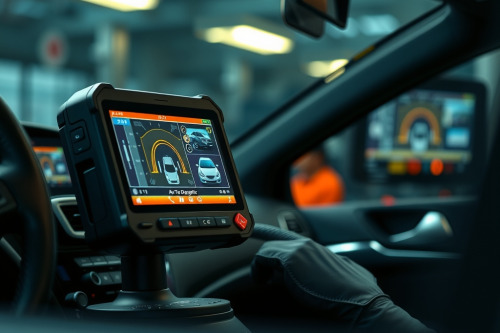
Modern platforms with partitioned gateways and ethernet backbones turn simple electrical faults into catastrophic shop losses. After 22 years of busting knuckles across independent bays and dealerships, I've watched cheap code readers bury technicians in electrical confusion. Sifting through automotive diagnostic scanners for modern vehicles requires analyzing chipset throughput, multiplexing capability, and true bus speed rather than marketing claims. You need raw processing muscle and verified bidirectional scan tool logic to stay profitable on flat rate.
Protocol architectures in automotive diagnostic scanners for modern vehicles
Today's vehicle networks no longer depend exclusively on standard high-speed Controller Area Network wiring running at 500 kbps. Late-model chassis employ CAN FD delivering up to 5 Mbps alongside DoIP handling 100 Mbps flash updates and telemetry. When an OBD2 scanner lacks native hardware transceivers for these modern protocols, packet collision stalls the link layer immediately. The tool either defaults to generic OBD2 mode or fails validation at the security gateway.
Bench tests show massive latency spikes when using adapted hardware dongles versus native multiplexers. A native CAN FD processor interrogates 42 modules across a dual-gateway chassis in under 18 seconds. Legacy tool architectures convert those packets sequentially, dragging interrogation times past 140 seconds. That delay burns billable hours before you even inspect freeze-frame logs.
Processing hardware, bus speeds, and diagnostic throughput
A ruggedized housing means nothing if the central processor chokes on high-density live sensor data. Multi-channel data streaming demands at least 4 cores running at 2.0 GHz paired with 4 GB of operating RAM to prevent screen freezes during road tests. When graphing 12 live PID parameters simultaneously, buffer underruns hide momentary voltage drops.
Clean signal acquisition during dynamic tests separates professional units from budget handhelds. Technicians frequently need to verify primary sensor integrity with an oscilloscope while logging serial data through the DLC interface. If the scanner processor drops capture frames below 30 samples per second, intermittent dropouts on 5V reference circuits completely disappear from your timeline.
Bidirectional controls and topology mapping in practice
Component activation tests are non-negotiable for proving component failures cleanly. A high-end tool gives you robust active test capabilities to drive EVAP vent solenoids, command variable valve timing advances, and actuate direct-injection fuel pumps to 200 bar. You confirm mechanical response right from your rolling cart without tearing harnesses apart prematurely.
Color-coded topology mapping scan tool interfaces dramatically reduce troubleshooting steps on multiplexed networks. Instead of reading a disorganized list of 30 stored fault codes, topology maps show bus branches graphically. A red node immediately isolates whether an entire sub-network went offline due to a shorted terminating resistor or a single failed blind-spot radar module dragging down a chassis loop.
Cutting bay time and preventing comebacks on complex networks
Every flat-rate tech knows that misdiagnosing a communication fault ruins a week of billable production. Chasing phantom codes without validating bus sleep states drops you straight down an endless diagnostic rabbit hole. Modern gateways enter sleep state only after all control units acknowledge specific power-down commands.
Solid diagnostic tools display bus sleep timers and module wake-up triggers directly. That capability streamlines parasitic draw evaluations across complex body control circuits. Delivering an accurate repair on the initial ticket is the difference between making book hours and preventing comebacks that eat into your weekly paycheck.
Selecting automotive diagnostic scanners for modern vehicles without getting burned
Procuring shop equipment requires scrutinizing software renewal models and secure gateway access clearances. FCA AutoAuth, Renault gateway unlocking, and modern German backend firewalls require direct server authentication over Wi-Fi. The best OBD2 scanner setups manage digital certificates automatically without interrupting diagnostic workflows.
Review hardware durability specs before writing the check. Drop ratings of at least 1.2m onto bare concrete and IP54 liquid resistance ratings ensure internal circuit boards survive oil spray and shop floor drops. Skip units carrying proprietary, sealed batteries that can't be swapped in under 5 minutes when continuous diagnostics deplete the pack mid-shift.
Practical verification protocol for your next scan tool buy
Before purchasing automotive diagnostic scanners for modern vehicles, demand an in-shop demonstration on your toughest problem car. Connect the tool to an active CAN FD network, command automated module sweeps, and verify active test capabilities under load. Inspect live data refresh rates across 10 or more PIDs while running bidirectional actuation. Put dependable processing power in your stall today to slash diagnostic time and keep every bay productive.