
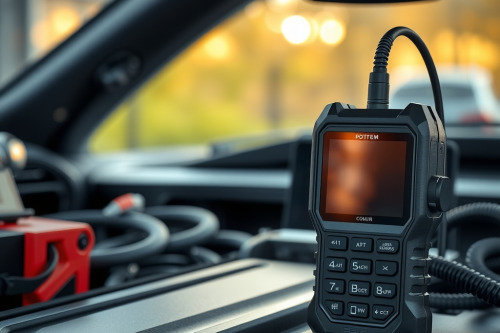
I spent 20 years busting knuckles on shop concrete before realizing most driveway gear is junk. Cheap code readers send amateur tinkerers down a costly diagnostic rabbit hole without isolating component failures. Choosing the best OBD2 scanner for DIY mechanics requires evaluating communication protocols and live data capture speed rather than colorful plastic cases. Here's the technical breakdown to keep your fleet running without wasted bay time.
Data refresh rates define the best OBD2 scanner for DIY mechanics
Cheap scan tools update sensor values at a lethargic 1 Hz rate. That lag masks intermittent misfires occurring under heavy load. Professional vehicle networks operate across a high-speed CAN bus transferring signals at 500 kbps. A scanner choking on incoming parameter identification (PID) requests delivers incomplete data frames. You can't diagnose a transient throttle position glitch when your screen skips every 3 engine cycles.
Bench tests confirm hardware decoders with dedicated coprocessors sustain 10 Hz refresh rates across 4 concurrent data streams. Pick units featuring multi-PID graphing capabilities. Plotting upstream air-fuel ratio sensors against short-term fuel trim reveals unmetered vacuum leaks within 60 seconds of idle.
Bi-directional controls versus passive code readers
Generic handhelds merely read passive trouble codes. That limitation keeps you guessing whether a fault lies in the harness, controller, or actuator. Any seasoned flat-rate tech knows active command testing cuts troubleshooting time by 75%. Bi-directional capability lets you trigger the fuel pump relay, cycle variable valve timing solenoids, or command radiator fans directly from the interface.
Actuation testing for emissions circuits
EVAP leak codes waste entire weekends. A tool with active system control seals the vent valve on command. You then pressurize the fuel tank with 1 psi of regulated smoke to spot cracked vapor lines immediately. No manual component jumping is required.
Hydraulic brake bleeding routines
Replacing an ABS modulator valve introduces air into internal valves. Standard pedal bleeding can't displace trapped micro-bubbles from the pump assembly. Automated ABS bleed sequences cycle the internal solenoids at 15 Hz, clearing hydraulic air pockets without damaging precision valves.
Reading freeze frame data and live sensor parameters
A diagnostic trouble code only tells half the story. The freeze frame buffer records an exact operational snapshot from the moment the powertrain module detected the fault. Look closely at engine coolant temperature, calculated engine load, and vehicle speed. A lean code setting at 65 mph indicates fuel starvation, while the identical code at idle points straight to an intake manifold gasket failure.
Monitoring oxygen sensor voltages prevents costly comebacks. Upstream sensors must toggle between 0.1V and 0.9V at least 3 times every 10 seconds during closed-loop operation. Sluggish transition rates show contaminated sensor elements long before the onboard computer flags an official catalytic degradation code.
Diagnostic architecture for your rolling cart setup
Decide early between standalone scan units and wireless diagnostic interfaces. Standalone tools with rubberized shock bumpers withstand accidental 2-meter drops onto dirty shop floors. Built-in lithium batteries eliminate power dropouts during low-voltage starter cranking tests.
Wireless adapters paired with tablets give expansive graphing displays. However, Bluetooth 4.0 latency creates measurable lag during road tests. If you run a wireless setup on your rolling cart, specify an interface supporting Wi-Fi direct or Bluetooth 5.2 protocol layers to preserve data packet integrity across transmission distances up to 10 meters.
Selecting the best OBD2 scanner for DIY mechanics without overpaying
Don't pay for heavy commercial truck protocols or exotic Euro coding packages you'll never touch. Focus your budget on full-system coverage handling powertrain, body control module, transmission, and supplemental restraint systems. Ensure the manufacturer offers clear updates without forcing expensive annual subscription locks after 12 months.
Software update policies
Many hardware brands disable bidirectional controls if you skip annual software renewals costing upwards of 300 dollars. Choose platforms guaranteeing lifetime free updates for core OBD2 functions and baseline manufacturer diagnostics.
Topology mapping benefits
Advanced user interfaces present a visual tree of the onboard communication network. Color-coded network mapping identifies unresponsive control units within 15 seconds, alerting you immediately to severed bus wiring or flooded junction blocks.
Final verdict for home garage diagnostics
Equipping your workspace with the best OBD2 scanner for DIY mechanics eliminates the guesswork of swapping expensive sensors blindly. Focus on high refresh speeds, actuation testing, and detailed / complete freeze frame capture to master tough driveability complaints. Stop throwing random parts at your engine bay and invest in diagnostic capability that delivers concrete answers today.