
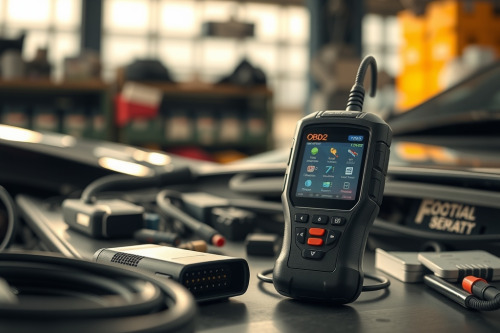
Blowing 3 hours chasing an intermittent CAN bus glitch kills your daily billable efficiency. After 22 years busting knuckles in heavy repair shops, I know that cheap code readers cost you more money than they save. You need the best OBD2 scanners for mechanics to pin down elusive driveability faults before committing shop resources. Reliable diagnostic hardware separates profitable technicians from those who guess on parts.
Hardware architectures behind the best OBD2 scanners for mechanics
Processors dictate scan tool responsiveness. Sluggish platforms choke when processing high-speed multiplex networks running at 500 kbps. When you query modern powertrain modules, you cannot wait 45 seconds for protocol handshakes. Fast diagnostics demand octa-core chips running at 2.0 GHz with at least 4 GB of operating RAM.
VCI communication and wireless stability
Bluetooth VCI dongles free you from the driver seat. Working under the hood while commanding actuators requires rock-solid wireless stability across a 10-meter bay. Look for VCI pods equipped with dual-band 2.4 GHz and 5 GHz Wi-Fi alongside Bluetooth 5.0 channels. Dropping connection during an ECU adaptation bricks modules and wastes unpaid shop hours.
Ruggedized enclosures and drop ratings
Diagnostic tablets take severe punishment every shift. Oil spills, brake clean overspray, and accidental 1.5-meter concrete drops happen routinely around a rolling cart. You want IP65-rated rubberized housings with reinforced corner bumpers. Capacitive touchscreens must register inputs even when your fingers are coated in synthetic gear lube.
Data throughput and live data PID refresh rate benchmarks
A static code lookup solves only entry-level driveability problems. Intermittent misfires require real-time telemetry graphed at high frame rates. If your scanner polls 4 primary PIDs at under 10 frames per second, you'll miss millisecond fuel trim drops. Top-tier professional automotive scan tools sustain 30 to 60 frames per second across 12 concurrent PIDs.
Graphing sweeps against a secondary reference
Catching glitchy throttle position sensors requires dynamic signal overlays. You graph absolute throttle position directly against commanded pedal position while sweeping the pedal slowly with the ignition on and engine off. Any sudden signal dropout confirms a worn carbon track inside the assembly. Without rapid refresh rates, that glitch disappears between standard polling intervals, leading you straight into a diagnostic rabbit hole.
For deep electrical verification, technicians frequently backprobe circuits using an oscilloscope to confirm physical voltage drop before condemning an expensive component.
Bidirectional control scan tool deployment on modern chassis
Static testing wastes valuable bay time. Active component testing isolates mechanical failures from electrical control faults in under 2 minutes. A bidirectional control scan tool allows you to command EVAP vent valves, toggle cooling fans through 3 distinct duty cycles, and pulse individual injectors without disassembling harnesses.
Targeted functional testing procedures
Consider a variable valve timing DTC on a variable displacement engine. Instead of tearing off front covers, use active commands to cycle the oil control solenoid at 10% duty cycle increments. Watch live camshaft advance angles change in direct response to your command. If advance tracks command within 2 degrees, the circuit and mechanical actuator are intact. You just saved 4 hours of teardown labor.
Cylinder balance and compression verification
Automated relative compression tests save important wrench time. The tool cranks the starter for 10 seconds while monitoring starter motor amperage draw through the crankshaft position sensor feedback. Cylinders showing more than an 8% drop warrant mechanical gauge verification. This protocol isolates mechanical engine damage before a flat-rate tech wastes time swapping ignition coils.
Topology mapping and OEM level diagnostic tools integration
Modern vehicles network over 40 distinct electronic control units across high-speed, medium-speed, and LIN bus networks. Color-coded network topology displays show the complete communications tree on one screen. A red module instantly flags a communication failure, while yellow indicates active DTCs stored inside that specific node.
Gateway bypass protocols
Security gateway modules lock unauthorized aftermarket tools out of actuation menus on 2018 and newer platforms. Modern platforms require integrated AutoAuth access to bypass security barriers seamlessly. Premium OEM level diagnostic tools negotiate digital certificates over Wi-Fi automatically. Without licensed gateway access, you cannot even perform rear brake pad service retracts on modern European or domestic platforms.
ECU coding versus full offline programming
Understand the technical boundary between coding and flashing. Coding adjusts configurable module parameters, such as daytime running lights or injector flow rates. Flashing overwrites the entire flash ROM memory array with fresh binary calibrations. Performing J2534 pass-thru flashing demands stable battery support units capable of maintaining an unwavering 13.8V supply at up to 70A.
Field evaluation metrics for the best OBD2 scanners for mechanics
Software subscription structures make or break scanner economics. Some platforms lock hardware completely once your annual subscription lapses. Avoid tools that brick basic functionality when licenses expire. Demand equipment that retains full native diagnostic features even if you defer updates for 12 months.
OEM platform coverage depth
Broad vehicle coverage doesn't guarantee deep diagnostic capabilities. Mid-tier platforms claim domestic and Asian coverage but fail when initiating diesel particulate filter regenerations or SAS calibrations. Benchmark prospective platforms against your shop workload. If 35% of your bay volume involves complex German platforms, prioritize scan tools with native DOIP and CAN FD protocol transceivers.
Report generation and customer transparency
Clear documentation simplifies service advisor sales. Pre-scan reports capture existing faults across all modules before your techs turn a wrench. Post-scan reports prove complete system clearing after repairs. Sending branded, color-coded health reports directly to vehicle owners builds trust and authorizes high-ticket work rapidly.
Shop deployment strategy for preventing comebacks
Never base your equipment purchasing decision purely on sticker price. Calculate return on investment through recovered diagnostic hours and avoided misdiagnoses. Dependable diagnostic platforms streamline workshop workflow while directly preventing comebacks that drain weekly profit margins.
Equip your frontline technicians with the best OBD2 scanners for mechanics suited to your specific fleet demographic. Audit your shop failure rates on complex drivability tickets this month, verify your scan tool coverage gaps, and upgrade your diagnostic arsenal with hardware that pays for itself.