
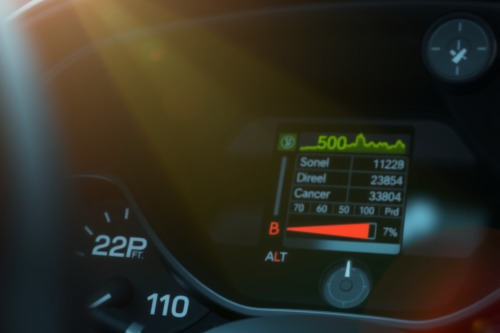
Every flat-rate tech knows dropping an oil pan on a hunch burns billable hours. After 20 years of busting knuckles on stubborn valve bodies, I let live sensor values dictate my mechanical tear-downs. You need to know how to diagnose car transmission problems with OBD2 data before turning a single bolt. Modern scanners expose internal hydraulic leaks and slipping clutch packs in real time.
Baseline telemetry: configuring your OBD2 scanner for live capture
Don't just scan generic DTCs and walk away. A stored code like P0700 simply means the transmission control module requested the check engine light. Roll your rolling cart to the vehicle, plug in your OBD2 scanner, and bypass generic OBD to access proprietary transmission PIDs. You need direct communication with the transmission module to sample high-frequency sensor streams.
Isolate your PID list immediately. Polling 40 generic parameters drops your refresh rate down to 2 frames per second. That slow rate hides intermittent hydraulic dropouts. Select only 4 to 6 critical transmission live data PIDs to push refresh speeds above 25 frames per second. Prioritize turbine input shaft speed, output shaft speed, gear ratio command, line pressure duty cycle, and fluid temperature.
How to diagnose car transmission problems with OBD2 data using slip RPM
Clutch pack degradation reveals itself mathematically before throwing metal into the pan. Compare engine RPM against transmission input shaft speed to isolate converter slippage. Next, compare input speed against output speed multiplied by the current gear ratio.
Identifying torque converter clutch slip
Command the torque converter clutch to full lockup at 75 km/h on a level road. Monitor torque converter clutch slip speed directly on your graph. A healthy unit holds slip between 0 and 15 RPM under steady throttle. If the PID climbs past 80 RPM while duty cycle indicates 100% applied pressure, the friction lining is glazed or the TCC apply piston seal has blown out.
Calculating mechanical clutch slippage
Internal slipping clutches generate rapid flare during gear transitions. Monitor your calculated gear ratio PID during the 2-3 upshift. If input shaft RPM spikes by more than 150 RPM before the gear ratio stabilizes, the oncoming clutch is slipping. A worn planetary gear train clutch pack takes excessive bay time to rebuild, so prove the slippage digitally before pulling the transmission out of the chassis.
Interrogating the shift solenoid circuit and line pressure command
Valve body wear often mimics catastrophic mechanical failure. Modern transmissions rely on pulse-width modulated solenoids to regulate hydraulic circuits. Distinguish between an electrical coil fault and a stuck spool valve by analyzing commanded state against feedback current.
Verifying shift solenoid circuit integrity
When an OBD2 scan flags a shift solenoid circuit code, log both commanded current and actual current return. A shorted coil shows maximum amperage near 1.8 A instantly, while an open winding drops current to 0 A. If the computer commands 1.2 A to solenoid B and the current loop tracks it cleanly, the electrical side works. Any harsh engagement or delayed shift is caused by a physically sticking hydraulic bore, not bad wiring.
Monitoring transmission line pressure telemetry
Compare target transmission line pressure against actual pressure sensor readings. At idle in Drive, nominal baseline pressure runs between 4.1 bar and 5.2 bar. Blip the throttle to 50% load. Pressure should spike cleanly past 11 bar. If commanded pressure ramps up to 12.5 bar but the pressure switch shows delayed reaction, inspect the pressure regulator valve bore for excessive wear before replacing the pump.
Reading thermal stress via the transmission fluid temperature sensor
Heat kills automatic transmissions faster than mileage. Read the transmission fluid temperature sensor PID during cold startup and throughout prolonged test drives. A rational sensor should track ambient shop temperature within 3 degrees Celsius after an overnight soak.
Normal operating temperature sits strictly between 75 and 90 degrees Celsius. Temperatures crossing 105 degrees Celsius break down fluid shear resistance rapidly. If your live data shows temperature spiking during highway cruise while slip PIDs remain zero, inspect the external transmission cooler for debris or check for a restricted thermal bypass valve.
Road testing: how to diagnose car transmission problems with OBD2 data
Bench testing solenoids won't catch shift issues under load. Connect the best OBD2 scanner available in your bay and configure snapshot triggers. Set a trigger rule when slip speed exceeds 100 RPM or when actual gear differs from commanded gear for more than 0.5 seconds.
Execute 3 distinct test profiles:
- Gradual acceleration at 20% throttle to test solenoid apply transitions.
- Aggressive wide-open throttle passing gear at 80 km/h to test maximum line pressure hold.
- Extended cruise at 100 km/h to confirm steady lockup engagement.
Review the captured snapshot frame by frame on your rolling cart. Look at the exact frame where slip occurs. If solenoid duty cycle was at maximum commanded pressure and fluid temperature was within normal limits, you've an internal mechanical leak. This targeted diagnostic approach avoids wasting hours on pointless fluid flushes.
Field checklist for eliminating diagnostic rabbit holes
Falling down a diagnostic rabbit hole costs your shop money and ruins your productivity. Keep your troubleshooting systematic to maintain strict control over diagnostic time. Prevent misdiagnoses by verifying external electrical inputs first.
- Inspect mass air flow and throttle position PIDs before condemning transmission shifts. Engine load calculations dictate transmission shift scheduling.
- Check system battery voltage under heavy load. Alternator ripple exceeding 0.4 V AC corrupts vehicle speed sensor signals and causes erratic gear hunting.
- Perform an adaptive value reset only after confirming clean fluid and verified hydraulic pressures. Clearing adaptives on a worn transmission can cause total clutch slippage.
Thorough data logging remains the only proven method for preventing comebacks. You now possess the exact framework showing how to diagnose car transmission problems with OBD2 data without second-guessing yourself. Deploy these diagnostic techniques, grab your diagnostic tools, and start capturing live shift telemetry on your next trouble car.