
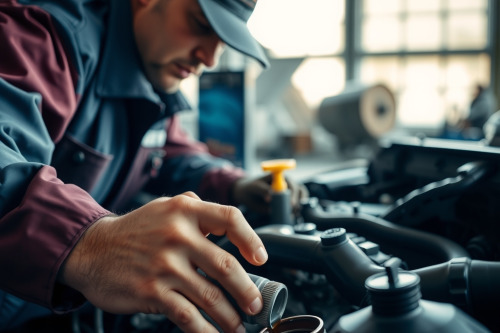
I've spent 25 years busting knuckles under vehicle lifts, seeing catastrophic failures that started as minor fluid issues. Ignoring lubricity breakdowns and pressure drops burns up rotating assemblies faster than anything else in the shop. To fix common engine oil problems, you must approach the symptoms methodically rather than throwing parts at a hunch. Follow this field guide to keep your bay productive and eliminate costly comebacks.
How to Diagnose Pressure Loss and Fix Common Engine Oil Problems
Is that red dashboard indicator triggered by a dead sensor or total mechanical failure? Never rely purely on instrument cluster gauges. When a customer rolls in with a flickering warning light, do not dive down an electrical diagnostic rabbit hole right away. Connect a high-end OBD2 scanner to verify sensor data, then back it up mechanically. A dependable mechanical oil pressure test kit tells the real truth within 10 minutes of bay time.
Thread the manual tester directly into the oil pressure sending unit port. Factory specifications typically require a minimum of 10 psi for every 1000 RPM, with a hot idle baseline around 20 psi. If mechanical pressure drops below 8 psi at idle, your bearings are starving. Suspect a worn oil pump, blown balance shaft seals, or washed-out rod bearings before condemning the electronics.
Where's That Engine Oil Leak Coming From?
Why do oil leaks always look like they originate from the lowest point on the bellhousing? Gravity and air currents under the chassis lie to you constantly. A leaking valve cover gasket or cam plug at the rear of the cylinder head drips directly onto the transmission housing, mimicking a failed rear main seal. Clean the engine block down to bare metal using solvent before chasing ghost leaks.
Pull your ultraviolet dye kit off the rolling cart. Add 30ml of fluorescent dye into the crankcase and run the engine for 15 minutes. Inspect the block with a 395nm blacklight in a dark stall to trace the fluid trail directly to its origin. You'll often pinpoint degraded valve cover grommets, a fractured oil filter housing adapter, or timing cover porosity long before pulling a transmission.
Why Is the Motor Burning Lubricant Without Dripping?
How can a crankcase lose 2 liters of oil between service intervals without leaving a single puddle on the driveway? The combustion chamber is consuming it directly. Pull the spark plugs and inspect the porcelain tips for heavy ash deposits. White or tan crusty deposits confirm that engine oil is burning inside the cylinders.
Perform a wet and dry cylinder compression test alongside a crankcase pressure test. A positive crankcase ventilation valve stuck in the closed position pressurizes the bottom end, forcing oil vapor past valve stem seals and piston rings. Worn low-tension oil control rings allow oil into the combustion chamber on the intake stroke, generating blue exhaust smoke during wide-open acceleration.
What Is the Safest Way to Clear Heavy Oil Sludge Buildup?
Can aggressive chemical flush treatments save an engine filled with petroleum sludge? Aggressive motor flushes present severe risks on high-mileage blocks. Harsh chemical detergents dissolve sludge into heavy flakes rather than liquified suspensions. Those floating carbon flakes rapidly clog the fine mesh of the oil pickup tube screen, causing sudden oil starvation.
Every experienced flat-rate tech knows that mechanical removal remains the only dependable solution for severe sludge. Drop the oil pan and physically clean the bottom reservoir. Scrape the valve train cavity and inspect the oil returns in the cylinder head casting. Replacing damaged components by hand prevents engine seizure 200 miles down the road.
Best Shop Protocols to Fix Common Engine Oil Problems and Prevent Comebacks
How do professional shops guarantee that lubrication system repairs last long term? Preventing comebacks requires strict discipline regarding fluid quality, filter choices, and seal prep. Always clean sealing surfaces with non-chlorinated brake cleaner to make sure liquid silicone gaskets adhere properly. Torque every fastener to precise factory ratings using a calibrated torque wrench rather than guessing with an impact gun.
Select premium filters featuring synthetic media and silicone anti-drainback valves instead of cheap cellulose units. Match the crankcase fluid strictly to OEM specifications, such as 0W-20 or 5W-30 full synthetic with proper dexos or API certifications. When you systematically fix common engine oil problems using verifiable diagnostic numbers and quality parts, your repairs stay dependable and your bay runs at maximum profitability.