
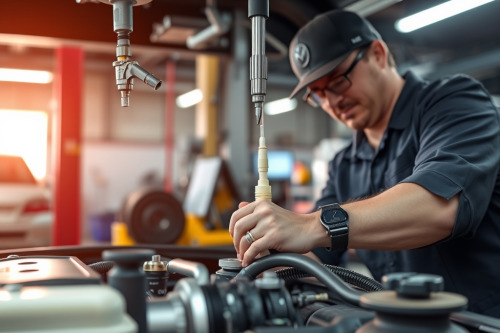
Twenty years of busting knuckles taught me that fuel delivery faults waste more bay time than almost anything else. You can't afford to fall down a diagnostic rabbit hole chasing ghost misfires when starved cylinders drop power under load. We'll cut through the noise and show you how to fix common fuel system problems without guessing. Grab your rolling cart and follow this battle-tested process to verify delivery specs before condemning good parts.
Triage lean running condition codes before turning wrenches
Every proper diagnostic starts on the data stream. Plug your OBD2 scanner into the port and verify fuel trim data before cracking lines loose. High positive numbers on long-term fuel trim (LTFT) exceeding 10% point straight toward unmetered air or inadequate delivery. A flat-rate tech who skips this step will throw parts at an engine blindly.
Watch how trims react under load. If trims shoot up past 20% at wide-open throttle, you have a delivery deficit rather than a vacuum leak. Vacuum leaks tend to normalize at higher RPM, whereas a weak pump chokes when fuel demand spikes. Document freeze frame records, check for stored lean running condition codes, and identify whether the starvation impacts one bank or both.
How to fix common fuel system problems with mechanical fuel pressure testing
Data monitors reveal what the computer thinks is happening, but fluid dynamics dictate the reality. Never trust electronic pressure sensors entirely on port-injected platforms. Screw a manual gauge directly onto the test port on the fuel rail to see the physical truth.
Baseline pressure versus volume testing
Static pressure alone will mislead you. A pump might build 55 psi important-on engine-off, yet collapse to 20 psi under load because internal impellers are worn or an inlet strainer is packed with debris. Run the engine, crack the throttle, and measure fuel flow. Modern port injection systems need at least 0.5 liters of fuel delivered in 30 seconds into an approved container. Anything less means the system is starving under load.
Holding residual pressure
Shut the engine off and watch the gauge needle. The system should maintain system pressure above 35 psi for at least 15 minutes. Rapid leakdown indicates three distinct failures: a leaking pressure regulator diaphragm, a faulty check valve inside the fuel pump module, or an injector stuck open.
Diagnosing electric fuel pump failures and voltage drops
Before pulling a tank or cutting through carpet access covers, perform a failing fuel pump diagnostic on the wiring harness. Pumps fail frequently from electrical resistance rather than mechanical seizure. A worn pump draws excessive amperage, overheating connectors and relays until circuit failure occurs.
Executing the loaded circuit check
Connect your digital multimeter across the pump harness while commanding the relay on. You should measure system battery voltage—typically 12.4V to 12.6V. Anything under 11.8V under operational load means excessive resistance exists along the power feed or ground path. Check the ground circuit; your total voltage drop across the ground wire must read below 0.5V.
Current ramping with a scope
If you want precision without dropping the fuel tank, hook a low-amp probe up to your lab scope around the pump fuse. A healthy brushed electric pump produces uniform, repetitive wave humps. A broken commutator segment or binding armature creates irregular dropouts on the waveform, signaling an imminent breakdown before the customer gets stranded.
How to fix common fuel system problems caused by dirty or leaking injectors
Fuel injectors operate in extreme thermal environments. Over time, gum deposits choke flow nozzles, generating distinctive clogged fuel injector symptoms such as rough idle, hard hot starts, and random single-cylinder misfires. Identifying the bad injector takes systematic isolation.
Testing coil resistance and pulse response
Cold coils can pass resistance tests while shorting out once engine bay temperatures rise. Pull the harness connectors and measure injector coil resistance across pins. Most high-impedance port injectors should read uniformly between 11 ohms and 14 ohms at 20 degrees Celsius. If one injector measures 6 ohms or open circuit, replace it immediately.
Dynamic balance pressure drop test
Pressurize the rail, pulse each injector individually for 50 milliseconds using an activation tool, and observe the exact pressure drop on your mechanical gauge. Healthy injectors drop pressure by the exact same margin, roughly 5 psi to 7 psi per pulse. An injector dropping only 2 psi is restricted, while one dropping 15 psi is dripping and washing cylinder walls.
Managing high pressure direct injection failures
Gasoline direct injection operates under extreme hydraulic parameters. We're no longer dealing with basic 45 psi delivery; direct injection demands 400 psi at idle and pushes well past 2,000 psi under wide-open acceleration. Diagnosing these requires zero tolerance for sloppy procedures.
Always verify the low-pressure lift pump supplies at least 60 psi to 75 psi directly to the inlet of the mechanical high-pressure pump mounted on the camshaft. When low side feed drops, the high-pressure pump cavitates and logs fuel rail pressure deviation codes. Inspect the camshaft follower for mechanical scoring. A worn roller follower will reduce stroke travel on the pump piston, starving the direct rail of required volume.
Eliminating fuel contamination and preventing comebacks
Fixing the component without cleaning the source guarantees warranty claims. When an electric fuel pump fails, pull a fuel sample into a clear glass jar. Let it settle for 10 minutes to inspect for water separation, diesel cross-contamination, or fine rust particles. Gray sediment indicates metal-on-metal wear from pump failure, which rapidly migrates into the injectors.
Always flush the fuel lines and vacuum clean the tank reservoir when replacing any failed delivery unit. Slapping a fresh pump into a dirty tank will ruin your new assembly within 500 miles. Replace the fuel filter whenever serviceable units exist, install fresh seals on all disconnects, and torque rail mounting bolts strictly to manufacturer torque values.
Taking the time to fix common fuel system problems thoroughly pays massive dividends in reliability. Verify pump voltage, confirm pressure under load, and balance injector delivery to keep comebacks off your schedule. Roll your diagnostic cart to the bay, connect your pressure gauge, and confirm your fuel delivery numbers before signing off on the ticket.