
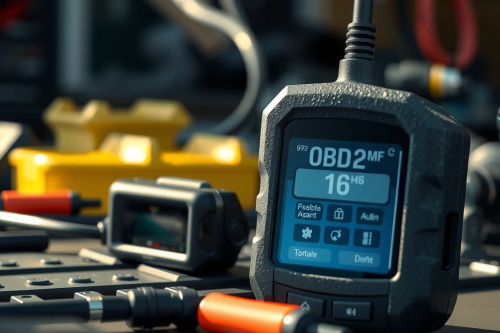
I've spent 20 years busting knuckles in independent repair shops, and cheap gear always costs you double. Grabbing the wrong tool turns a routine misfire check into an unpaid diagnostic rabbit hole. This practical OBD2 scanner buying guide breaks down hardware tiers using hard shop data to safeguard your margins. Choose what actually clears trouble tickets before burning billable hours.
Decoding tool tiers in our OBD2 scanner buying guide
Diagnostic equipment falls into 3 distinct functional classes. Budget handhelds run between $25 and $60, delivering bare-bones emissions verification. Service-tier units range from $150 to $600, unlocking multi-system health checks for ABS, SRS, and transmission modules. High-end diagnostic platforms command between $1,200 and $5,000, bringing bidirectional control, module replacement protocols, and guided troubleshooting routines directly to your bay.
Hardware processing speed separates functional diagnostic gear from cheap landfill plastic. A basic code reader relies on slow 8-bit or 16-bit microcontrollers that sample data across single-wire connections at sluggish update intervals. Modern shop-grade platforms pack quad-core or octa-core processors running custom Android environments. They process live bus communications across dual-band Wi-Fi and Bluetooth 5.0 at refresh rates under 30ms per parameter group.
Basic code reader limitations on modern vehicle platforms
A basic code reader speaks standard SAE J1979 modes. That design limits your view strictly to generic emissions-related parameters like standard P0xxx fault codes. These units interrogate the engine control module through the standard 16-pin DLC interface, but they completely ignore chassis, body, and communication networks.
The hidden cost of blind diagnostics
Generic tools leave you blind to proprietary OEM codes. A vehicle limps into your stall with stability control lights flashing, yet a low-cost tool reports zero DTCs because it can't query the ABS or steering angle sensor. You end up swapping good parts on hunch, wasting critical bay time while customer frustration climbs. Reliable diagnostic workflows demand access to manufacturer-specific live sensor data stream metrics that update fast enough to catch intermittent glitch signals.
Mid-range diagnostic tools and bidirectional scan tool capabilities
Mid-tier devices bridge the gap between simple readouts and active system control. Integrating a bidirectional scan tool into your workflow fundamentally changes how you verify component failures. Instead of pulling inner fender liners to probe harness plugs with backprobes, you command actuators directly from the screen.
Active testing that prevents rework
Commanding an EVAP purge solenoid to pulse at 20Hz proves electrical continuity and driver circuit integrity within 10 seconds. You can drive electronic throttle actuators through specific sweep percentages, switch radiator fan relays from low to high output, or drop individual cylinders to monitor RPM drop rates. Verifying component response through active commands is critical for preventing comebacks that wipe out weekly productivity for any flat-rate tech.
Advanced workshop gear: ECU coding and programming power
High-end platforms give OEM-level programming and configuration routines. Modern vehicle architectures run upwards of 70 interconnected modules communicating over CAN FD and DoIP networks at speeds reaching 100 Mbps. Replacing a headlight ballast, battery management sensor, or steering rack now requires variant coding to handshake with the central gateway.
Flagship units support SAE J2534-1 and J2534-2 pass-thru protocols, allowing you to flash updated calibration files from factory servers directly into powertrain modules. When electrical signals become erratic, pairing a scan platform with a dedicated oscilloscope lets you compare digital trace waveforms against serial live data. That confirms whether a communication drop stems from a corrupted buffer or a physically degraded wiring harness.
Practical OBD2 scanner buying guide criteria for your rolling cart
Selecting the best OBD2 scanner requires matching hardware specifications to your actual daily workflow rather than marketing bullet points. Screen brightness must exceed 600 nits to remain readable under harsh fluorescent shop lights or direct sunlight on outdoor road tests. Battery capacity needs to hit at least 5,000mAh so the unit doesn't drop offline during lengthy sensor relearn procedures.
Keep an eye on operating costs before wheeling any new unit to your rolling cart. Many pro-tier scanners lock features behind annual software renewal subscriptions ranging from $300 to $1,000. If your bay focuses mostly on standard mechanical brake jobs, fluid services, and suspension work, paying four-figure annual fees for unneeded cloud programming updates ruins your return on investment.
Match your diagnostic tool investment to shop production demands
Use this OBD2 scanner buying guide to make an informed, data-driven buy. Weekend tinkerers need nothing more than dependable multi-system code reading and freeze frame access. Independent professionals require bidirectional functionality, bi-monthly software updates, and rapid multiplexing bus architecture to stay profitable across mixed vehicle fleets. Audit your last 20 repair work orders, identify your most frequent diagnostic roadblocks, and invest in the tool tier that pays for itself before the month ends.