
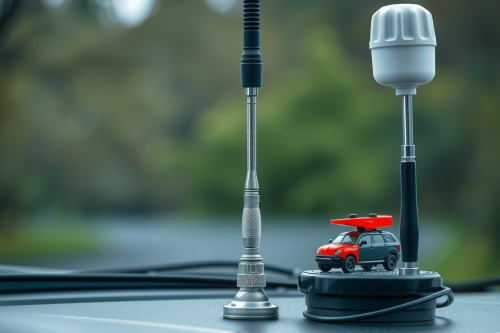
Factory navigation receivers choke inside modern windshields coated with thermal metallized films. After 14 years wiring rigs in the field, I've seen internal patch antennas drop lock constantly in urban canyons. Tackling the task of installing external GPS antennas solves dropped fixes by moving the RF capture point clear outside the chassis. Do this hardware retrofit once, and your unit locks instantly.
Why internal sensors drop lock on the road
Modern windshields reflect solar rays with metallic oxides. This design attenuates L1 band frequencies by up to 15dB. When you drive between high-rises, your gps navigation hardware starves for raw data. The unit defaults to dead reckoning through internal gyroscopes, but positional drift builds within 45 seconds.
Without direct line-of-sight satellite reception, signal triangulation fails outright. You get stuck with latency lag that displays your vehicle 30m behind its real-time location. That delay ruins turn-by-turn guidance, preventing rerouting loops from resolving before you miss highway exits. External mounting eliminates this signal bottleneck completely.
Important gear for installing external GPS antennas
Grabbing standard off-the-shelf wire will destroy your receiver signal. You need a 28dB high-gain active patch antenna with an integrated low-noise amplifier. Ensure the termination matches your receiver input port, usually an SMA connector or an MCX interface.
Check the impedance rating immediately. A value of 50 ohms is mandatory for automotive RF transmission lines. High-grade double-shielded RG-174 coax keeps stray engine interference from muddying raw satellite signals before they reach the main processing board.
Choosing the ideal rooftop mounting location
Placement defines RF performance. You need minimum 100mm of flat sheet metal around the base to act as an RF ground plane. Centering the antenna on the steel roof panel optimizes reception down to 5-degree horizon elevations.
Never tuck the puck beneath roof racks or tinted sunroof glass. Secure the magnetic mount firmly, or drill for a permanent bulkhead stud if you run heavy off-road trails. Keep the wiring run clear of high-voltage inverter packs and cheap dash cams. Noisy buck converters produce electromagnetic interference that triggers capacitive ghosting across your touchscreen digitizer and corrupts incoming NMEA data packets.
Clean coaxial cable routing through the cabin
Tuck the lead under the top edge of the rear windshield weatherstripping. Never pinch coaxial cable in door jams. A pinched dielectric crushes cable impedance, introducing severe signal reflections back into the GPS receiver module.
Route down the C-pillar trim, following the OEM harness clips. Secure the run with automotive adhesive clips every 200mm. Maintain a bend radius of at least 25mm around tight frame corners. Avoid routing lines directly over side-curtain airbag deployment channels to maintain safety standards.
Connecting the receiver and bench-testing signal locks
Hook the coax directly into your GPS receiver module. Power up the dash. Mount the display securely on the dashboard where direct sunlight will not cause glare washout during peak midday hours.
Access the satellite status diagnostic screen on the interface. Look for at least 8 solid satellite fixes with signal-to-noise ratios holding steady above 38dB-Hz. A rock-solid lock delivers accurate positional guidance without hesitation. This stability proves that even the best gps navigation for car builds rely strictly on proper antenna isolation rather than raw processing power.
Practical checklist for installing external GPS antennas
Inspect every joint before snapping your interior trim panels back into place. Check that the external puck sits horizontal to the sky without tilt angles exceeding 3 degrees. Verify that the cable shows zero tension at terminal points.
Relying on glass-mounted internal antennas degrades the best gps for car setups into guesswork machines. Tackling the process of installing external GPS antennas eliminates the packet loss that cripples onboard tracking modules. Inspect your cable clearances, verify 3D lock status on your diagnostic menu, and run a 10km field test to validate real-time accuracy under dense canopy cover.