
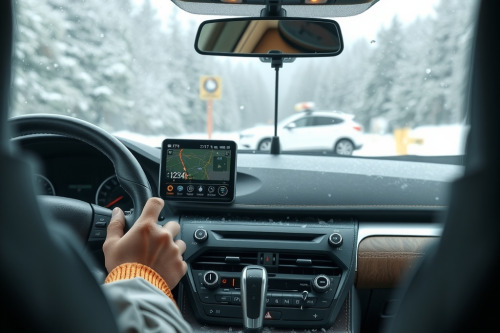
Sub-zero mornings destroy under-engineered dashboard electronics before you even clear the frost off your windshield. I have logged thousands of miles across frozen northern corridors, watching cheap receivers freeze solid and fail at critical junctions. Protecting equipment from cold weather is the difference between rolling safely and sitting stranded in a dead vehicle. Selecting the best gps navigation for car deployment demands zero compromise on thermal tolerance.
Thermal stress and protecting equipment from cold weather
Cold soak drops cab temperatures below -20°C overnight, contracts solder points, and fractures rigid internal traces. When you start the engine and blast cabin heat, rapid temperature deltas create internal condensation across circuit boards. Standard consumer units crack under this shock. Ruggedized hardware utilizes conformal coatings and wide-temp components rated down to -30°C to handle expansion stress.
Component tolerance thresholds
Internal power storage takes the hardest beating when ambient temperatures drop below freezing. Standard cells fail to discharge current properly when chilled, causing sudden system blackouts during boot cycles. If your setup relies on an internal lithium-ion battery, expect voltage sags and degraded life cycles. Hardwired supercapacitors offer far superior sub-zero navigation reliability because they operate reliably down to -40°C without chemical degradation.
Display failures and capacitive ghosting in frozen cabs
Cold displays behave erratically when physical liquid crystals stiffen. Liquid crystal response times plummet, creating horrific visual smear and display stutter during turns. You also face capacitive ghosting where frozen touch layers register false finger taps or ignore input completely. Quality panels implement resistive digitizers or pre-heated glass elements to preserve real-time touch accuracy under deep freeze conditions.
Reflected winter sunlight off roadside snow banks creates intense glare washout across unshielded glass. Look for displays pushing at least 700 nits of backlighting backed by optical bonding layers. Anything less turns into an unreadable mirror while driving past open snowdrifts.
Satellite acquisition and dead reckoning under freezing skies
A frozen dashboard receiver struggles during initial acquisition phases. Cold-start satellite lock takes significantly longer because internal clock oscillators drift off baseline frequency when chilled. Signal triangulation requires clean multipath rejection and multi-GNSS support to pull ephemeris data through heavy ice storms and dense cloud canopies.
Hardware dead reckoning bridges the gap when heavy winter storms obscure sky visibility. Integrated 3-axis gyroscopes, accelerometers, and wheel-speed pulses keep position calculation accurate inside tunnels and urban canyons. This sensor fusion prevents latency lag during sudden maneuvers, keeping your route verified even when overhead satellite tracking drops out completely.
Protecting equipment from cold weather through solid power setups
Unstable vehicle electrical systems wreck sensitive gear during harsh winter cold cranks. Starter motors draw hundreds of cold-cranking amps, sending destructive voltage dips through the 12V auxiliary line. Quality gps navigation hardware requires strong voltage regulation circuits to handle drops down to 9V without rebooting.
Clean in-cabin power delivery prevents continuous reboot cycles that corrupt flash memory during transit. Solid wiring harnesses with inline transient voltage suppressors protect board processors from destructive load-dump spikes. Route cables away from door seals where condensation gathers and freezes into abrasive ice chunks.
Selecting the best gps for car in sub-zero environments
Choosing the best gps for car utility requires ditching fragile smartphones that throttle processing speed or shut down to protect their batteries. Dedicated standalone navigators run optimized routing engines designed for continuous high-load computation. Dedicated units process mapping data without overheating when dash defrosters run continuously on maximum heat.
Advanced processors compute alternative lanes rapidly, preventing rerouting loops when unexpected winter road closures block primary mountain passes. Test the interface while wearing thick insulated gloves before mounting the hardware permanently. Physical hardware buttons or high-sensitivity touch screens make route corrections fast, safe, and manageable on iced-over highways.
Deployment protocols for dependable winter routing
Success on frozen roads comes down to consistent maintenance routines and proper field installation. Inspect your suction mounts and dash brackets daily, as freezing temperatures harden plastic compounds and cause mount detachment on washboard surfaces. Store portable navigation units in an insulated equipment pouch if you park outside overnight. Execute your diagnostic checks before hitting the highway, verify firmware updates, and secure your road navigation hardware for reliable field performance.