
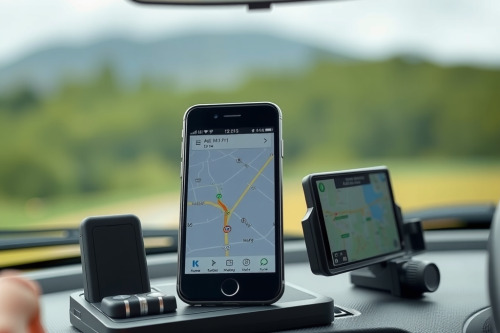
Every driver faces the sudden black screen when a phone overheats on the windshield under direct midday sunlight. Over 12 years of fleet testing navigation hardware taught me that raw reliability beats sleek software every single time. Deciding between a standalone GPS vs smartphone setup comes down to thermal endurance and dedicated antenna arrays. Pick the wrong interface, and you'll lose guidance right at a critical highway junction.
Antenna Hardware and Signal Triangulation Accuracy
Dedicated dashboard receivers hold a massive advantage in satellite capture. A dedicated unit packs a high-gain ceramic patch antenna directly beneath its housing. This design maximizes signal triangulation across GPS, GLONASS, and Galileo constellations simultaneously. Multi-path interference from downtown skyscrapers bounces off your chassis, yet a quality standalone receiver filters that RF noise cleanly.
Smartphones compromise antenna space to maintain an ultra-thin chassis profile. Mobile circuit boards squeeze GNSS chips between cellular modems, Bluetooth radios, and camera modules. This density produces RF desense. When your vehicle enters an urban canyon, high-rise concrete blocks the line of sight. Handsets quickly suffer from multi-path errors, miscalculating your location by up to 25 meters. Dedicated dashboard receivers counter this with internal sensors that execute accurate dead reckoning when sky visibility drops to 0%.
Satellite Receiver Sensitivity Benchmarks
A pure navigation unit updates positioning at 5Hz to 10Hz. Standard consumer phones poll location chips at merely 1Hz to conserve battery reserves. That difference causes observable latency lag during high-speed highway interchanges. At 110 km/h, a 2-second processing delay puts you 61 meters past your highway exit before the prompt even renders.
Standalone GPS vs Smartphone Thermal Endurance
Windshield mounting turns your car dashboard into a solar oven. Operating temperatures behind automotive glass routinely surpass 65°C within 30 minutes of peak sun exposure. Consumer handsets run on tight internal tolerances without a passive heat sink. When internal thermal thresholds hit 45°C, mobile operating systems automatically dim displays, throttle cellular modems, and shut down completely to prevent cell swelling.
Dedicated navigators survive extreme dashboard temperatures without breaking stride. Built with glass-filled polymer housings and vented internal shielding, they sustain direct operating heat up to 70°C. They do not drop frames or shut down navigation scripts during continuous 10-hour hauling shifts.
Display Performance: Glare Washout and Capacitive Ghosting
Glance value determines driving safety. If you must stare at a screen for 3 seconds to decipher a map arrow, your vehicle travels blind. Automotive displays solve this using purpose-built anti-glare matte layers that eliminate glare washout even in blazing morning sunlight.
Touchscreen Technology in Rough Cabin Environments
Phones rely on high-sensitivity capacitive glass displays. In winter weather or humid environments, condensation and sweaty fingers create severe capacitive ghosting, registering false inputs or freezing map manipulation entirely. Many industrial standalone receivers use resistive displays or heavy-duty capacitive touch surfaces calibrated for gloved hands and physical road vibrations. You tap the screen once, and the hardware executes the command reliably.
Real-Time Routing Logic: Preventing Rerouting Loops
Cellular-dependent applications rely heavily on cloud servers for dynamic recalculations. When an interstate bottleneck occurs, remote algorithms push alternate routes dynamically to thousands of drivers simultaneously. This algorithmic bottleneck sends hundreds of vehicles into narrow residential streets, causing heavy gridlock.
Hardware-based gps navigation calculates pathing logic locally using preloaded vector maps. These specialized routing chips excel at preventing rerouting loops when you deliberately bypass an inconvenient turn. Instead of recalculating 15 times within 200 meters, the onboard system recalibrates the vector path cleanly against your actual heading.
Offline Mapping Reliability
Dead zones remain a major threat on rural highways. Cellular apps drop route recalculations the moment 4G or 5G coverage drops out. Offline map caches on phones often fail if you deviate from the original buffer. A dedicated best gps navigation for car system stores detailed / complete offline continent maps on internal flash storage, guaranteeing uninterrupted path calculation across remote mountain passes.
Standalone GPS vs Smartphone Power Draw and Longevity
Sustained navigation demands heavy system resources. Running GPS antennas, cellular radios, and maximum screen brightness drains a standard handset battery from 100% to 0% in under 150 minutes. Constant charging while discharging under direct sunlight accelerates lithium battery degradation rapidly, creating a real risk of premature battery expansion.
Dedicated navigators draw direct 12V automotive power through fused harness converters. They handle unstable vehicle voltage spikes without damaging internal logic boards. You gain consistent operation without sacrificing personal device longevity or degrading communication tools needed for emergency calls.
Field Deployment Recommendations for Dashboard Navigation
Selecting the best gps for car setups requires realistic assessment of your transit environment. Urban commuters driving short trips can manage with mobile app platforms if cabin climate control keeps temperatures low. Long-haul drivers, remote field workers, and overland haulers must deploy dedicated navigators to guarantee absolute operational continuity. Inspect your windshield mount for vibration resistance, verify 12V clean power delivery, and secure a rugged dedicated receiver before setting out on demanding cross-country routes.