
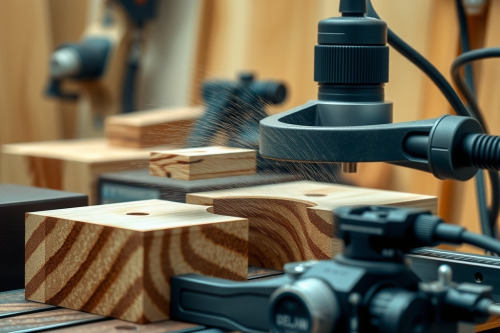
After 25 years running millwork shops, I see apprentices destroy expensive lumber simply by pinning the motor dial at maximum RPM. Mastering handling speed settings for different timber densities is the only way to protect your cutters and keep workpieces clean. Running a wide cutter too fast will glaze rock maple, while crawling through soft cedar tears fibers instead of slicing them clean. Match spindle rotation to grain resistance, and you'll save both your equipment and your project budget.
The physics of handling speed settings for different timber densities
Wood isn't an engineered composite; cellular density dictates how a cutter shears fibers. When assessing a wood router, motor electronics must maintain continuous torque under heavy loads. High-density stock like white oak or ipe resists the edge, generating friction heat within 2 seconds of dwell time. Low-density timber yields quickly, demanding higher edge engagement frequencies to avoid ragged edges.
Understanding surface speed prevents premature tool dulling. A 12.7mm straight bit running at 22000 RPM travels along its perimeter at roughly 14.6 m/s. Step up to a 50mm raised panel cutter at that same speed, and the rim velocity exceeds 57 m/s. At those peripheral velocities, friction instantly scorches dense end-grain. Your cutting feed rate must coordinate with motor RPM to yield clean shaving chips rather than fine, scorching dust.
Low-density softwoods and high spindle velocity
Working softwoods such as eastern white pine, basswood, and western red cedar brings unique challenges. Soft, flexible fibers yield under dull edges rather than severing cleanly. For these woods, optimum softwood routing RPM ranges between 18000 RPM and 22000 RPM using smaller profile cutters.
Preventing fiber collapse and tear-out
Running a wood router too slow in low-density timber produces ragged tear-out along the exit edge. The bit pushes the resilient fibers aside instead of cutting them. Maintaining high spindle speed with an aggressive pass slices the grain before it deflects. However, watch your extraction system closely; high-volume softwood shavings quickly create a dust collection choke across narrow dust ports.
High-density hardwoods: Taming heat and friction
Hardwoods like hard maple, hickory, and purpleheart demand conservative hardwood spindle speed ranges between 12000 RPM and 16000 RPM. Excessive speed doesn't give you a smoother cut here; it yields ruined edges and carbon buildup.
Preventing thermal damage on stubborn grain
When running dense timber, burning the stock is your primary operational failure. Heat softens brazed joints on a tungsten carbide profile cutter and tempers tool steel until the edge dulls. Lower the speed dial setting by 2 to 3 increments on the tool housing. Push your stock with steady mechanical momentum to make sure the cutter removes uniform 0.2mm chips that carry heat away from the cut line.
Bit diameter rules and handling speed settings for different timber densities
Never decouple wood density from tooling geometry. A balanced router bit diameter chart dictates that as cutter mass expands, spindle velocity must drop, regardless of timber species.
Calibrating diameter to motor speed
Shops evaluating a wood router review often focus strictly on horsepower, ignoring dynamic balance. For cutters up to 25mm diameter in medium woods like cherry or walnut, run between 18000 RPM and 20000 RPM. For large profile bits measuring 38mm to 65mm in diameter, reduce variable speed dial adjustments down to 10000 RPM or 12000 RPM. Forcing a large panel cutter past 16000 RPM introduces violent bit chatter, leaving washboard ripples across your finished stock.
Identifying and troubleshooting speed-related milling flaws
Diagnose site problems by inspecting cut surfaces and listen to the motor pitch under load. Mechanical errors telegraph clear warning signs before catastrophic work failure occurs.
Vibration, depth errors, and mechanical creep
If you notice stepped gouges across your profile depth, stop the tool immediately. Excessive feed resistance paired with high rotational drag triggers collet slip, allowing the bit shank to back out of the chuck during operation. Clean pitch buildup from collet tapers with mineral spirits every 10 runtime hours. A balanced machine operated as the best wood router on paper still performs poorly if loaded beyond the natural shear limit of the grain.
Job site protocols for flawless routing
Before initiating operations on unfamiliar stock, run test cuts on offcuts from the same board. Check that variable speed dial adjustments align with both cutter diameter and Janka hardness ratings. Lock your fences, align guides, and verify chip extraction velocity to prevent waste packing. Apply disciplined handling speed settings for different timber densities across every phase of your project. Calibrate your equipment settings today and verify every feed pass before cutting into prime stock.